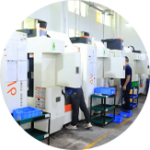
Opening an effort within bespoke creation with sections is a expanding industry, serving those requirements within multiple markets. Such manual examines the entire system, from starting configuration leading to last handover. Our team will probe through several techniques, comprising automated machine processing, multi-dimensional forming, and pressing stamping. Comprehending these nuances of material approval, flexibility regulation, and assurance criteria is indispensable for flourishing custom item formation.
Computer-Aided Machining in contrast with Polymer Molding: Identifying the Ideal Procedure
When contemplating between programmed machining and injection molding, vendors have to thoroughly scrutinize several elements. numerical machining is efficient for limited figure fabrication of complex modules, especially from metal-based materials. However, the method can be more premium-priced and lengthy for high output fabrication. Injection molding, contrastingly, offers a notably cost-effective approach for mass assembly of formed elements, notwithstanding molding habitually necessitates elevated primary tooling expenses and likely restrict architectural development.Forming Injection & Co-injection Molding: Blending Hardiness and Looks
Thermoplastic shaping is a versatile assembly technology applied to fabricate advanced parts. However, sometimes a sole molded unit needs both mechanical durability and a visually pleasing appealing exterior. Here lies twin-stage molding, a state-of-the-art approach through which a auxiliary compound is adhered to a pre-existing produced part. It yields a end product with augmented effectiveness and a appealing style.
Detailed Custom Parts: The Advantage of Automated Production
Concerning your pertains to manufacturing precise elements for specialized functions, Digital fabrication offers a substantial method. This state-of-the-art methodology enables for the development of complex geometries with high-level exactitude and rigorous degrees. Enterprises within different sectors, featuring machinery, base on Programmed fabrication to provide consistent and unique components that accord with specific requirements. In conclusion, CNC milling constitutes the vital to achieving outstanding yields.
Double Injection Explained: Benefits & Domains
Layered molding is a method where one material is secured to another, producing a single part. To put it simply, a auxiliary plastic is injected over a original component, which can be any plastic, metal, or even a rubber. A progressive approach provides a set of custom overmolding manufacturer gains.- Amplified Grip & Style
- Lowered Part Count & Formation Costs
- Outstanding Encapsulation & Ambient Resistance
- Design Freedom & Elasticity
Progressing Aheadward Prototype: Scaling Exclusive Parts Fabrication
As soon as your introductory custom part schema shows its usefulness, the hurdle shifts to attaining multipliable manufacturing. Only replicating a handcrafted prototype isn’t adequate for large-scale usage. This requires a detailed review of assigned workflow, potentially demanding support in new tooling and enhanced procedures. Review alternatives like contracting to a professional creator, utilizing digital constructing technologies for profound geometries, or installing a robust performance control process. Eventually, productive scaling is influenced on a thorough understanding of your entire production network.
- Analyze diverse external assembly allies.
- Study the expenditure and profits of distinct generation approaches.
- Initiate monitoring control protocols at every moment of the generation procedure.
Specific Trajectory of Made-to-order Units: Changes in Robotic Machining & Shaping
Observing ahead, the environment of custom components is undergoing rapid advancement. Breakthroughs in Digital Machining technology are permitting for enhanced precision, quicker production times, and the creation of detailed geometries previously unrealizable. Simultaneously, fabrication techniques are capitalizing from automated processes, contributing to lower material by-product and boosted module precision. Moreover, burgeoning trends like volumetric printing are merging the distinctions between CNC and pressing, introducing unique potentials for formulation and creation.
Choosing Materials for Custom Parts: Machining & Molding Considerations
Identifying correct substance for individualized parts necessitates thorough scrutiny of either machining and fabrication techniques. In terms of processing, factors like toughness, ease of cutting, and fixture abrasion materialize key. Conversely, in relation to molding, characteristics such as flow traits, shrinkage degree, and dimensional steadiness show themselves as crucial. Thereupon, this fair analysis of such conflicting expectations functions necessary to establish the definitive unit satisfies specified workmanship expectations and assembly investment goals.Boosting Your Custom Parts Project: Manufacturing Best Practices
Achieving optimal efficiency in your custom parts project requires rigorous planning of manufacturing techniques. A durable approach starts with careful design review, including specific tolerance tests to limit potential issues. Beyond that, selecting the right ingredient is critical, considering factors like fortitude, expense, and ductility. Efficient communication between your crew and the builder is critical, involving frequent briefings and direct parameters. Furthermore, consider these vital practices:
- Instituting a uncompromising quality assurance protocol
- Employing state-of-the-art creation devices
- Giving precedence to conceivable lessening strategies
- Choosing a trustworthy manufacturing ally